Guide
Preparing the house after one of you moves out
A house that one person has left looks and works differently from a lived-in home. Here's what to check, who should do what, and how to keep the costs from becoming a new fight.
The guide
Step by step.
The short answer
When one of you has moved out, check three things before listing: whether your homeowner's insurance still fits a vacant or partly empty house, which utilities need to stay on for showings and inspections, and who will do and pay for each repair. Put the work list and the budget in writing, signed by both of you, before anyone starts spending.
- 01
A house that's half empty
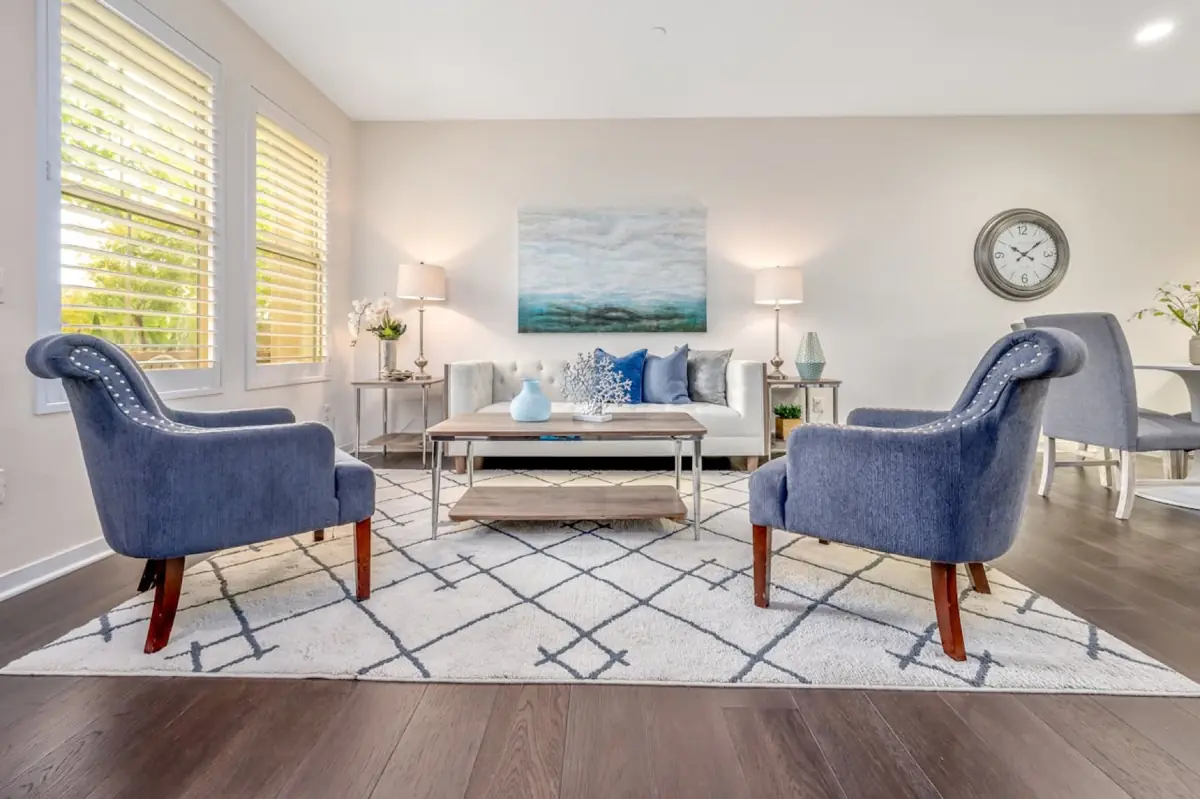
When one of you takes their share of the furniture, the house can end up with a bare dining room, a bedroom with only a mattress, and pale squares on the walls where pictures used to hang. Buyers notice. Listing photos notice even more.
None of that is a disaster, and none of it says anything about either of you. It's a staging problem with practical answers, and the first step is walking through together, or separately, with me and a notepad.
On that walk-through I'll note what needs fixing, what needs filling and what just needs cleaning, room by room. Both of you get the same notes afterward, in the same email, whether you walked through with me together or on different days. From there we can price the work, decide who does it and set a date for the listing photos that leaves enough time to finish.
- 02
Call your insurer
Homeowner's policies are written around who lives in the house. When the people living there change, or nobody lives there at all, the coverage questions change too, and I can't tell you what your policy says. Your insurer can. Call.
Ask in plain words: does the policy still cover the house if one of us has moved out, and does it still cover it if nobody lives there, and for how long? Ask whose names are on the policy and who gets notices. Then ask for the answer in an email, and put that email in your shared folder so both of you have it.
I'll ask both of you for the insurer's written answer before I list a vacant house.
- 03
Keep the utilities on
Buyers want to flip switches and run taps. Inspectors need power, water and heat to test the systems, and appraisers want to see a working house. Leave everything on through closing.
Lights matter for showings too. A dark, cold house on a February evening feels nothing like the listing photos, so set a few lamps on timers and keep the heat at a level that makes the rooms comfortable to walk through for the twenty minutes a buyer is inside.
If the person who moved out had the accounts in their name, decide in writing whether they stay that way or move to the other spouse, and who pays each bill. In a fully vacant house, ask me and your insurer what setting the heat should stay at through an Oregon winter, and who will check on the place between showings.
- 04
Who does the work
The spouse who still lives there is closest to the jobs, but that doesn't mean they should carry them alone. The spouse who left may want to come back to paint or fix things, and that needs scheduling the other person agrees to. A hired contractor is often the simplest answer for anything bigger than a weekend. Neutral hands help.
If you can't agree on who gets into the house and when, that's a question for your attorneys, and the court can issue temporary orders on the use and possession of property while the case is pending (ORS 107.095). I'll work within whatever you agree or the court orders.
- 05
Keys and check-ins
A house with nobody in it still needs someone looking after it. Agree in writing who walks through it, and how often, between showings: checking that doors are locked, lights are off, nothing is leaking and the mail isn't piling up on the porch.
Count the keys. Write down who holds each one, including garage remotes and any gate or shed keys, and put the list in the shared folder. If the spouse who moved out still has a key, decide together whether they keep it during the sale and when they'll use it, so nobody is surprised by the other walking in.
Showings go through me, and I keep a log of each one with the date and the buyer's agent, so both of you can see exactly who was inside and when. That log goes in the folder too, and I'll flag anything odd to both of you in the same email.
- 06
Put the budget in writing
Spending money on a shared house without a written plan is how small repairs become big arguments. Before anyone buys a can of paint, write down the jobs, a rough cost for each, who's paying up front and how that money gets settled at closing. Both of you sign or approve it by email. Then stick to it.
- Each repair or cleaning job, and who will do it.
- A cost estimate, or a bid if a contractor is involved.
- Who pays up front, and whether they're repaid from the proceeds.
- A dollar limit above which any extra spending needs both of you to agree again.
- Where the receipts go. The shared folder is the right answer.
Who pays, and how it gets settled at closing.
Who pays for repairs before listing - 07
Filling the gaps
For the empty rooms you have a few choices. You can bring in rented staging furniture, borrow pieces back temporarily, or leave the room clean and empty and let the photos show the space. Each has a cost, and a written agreement settles who pays for it.
Time the listing photos for after the move-out and the repairs, not before, because the photos stay on the listing for as long as it's live and a half-moved room will keep greeting buyers online long after you've fixed it. A buyer's first look is online. Read should we stage the house or sell as is before you spend anything on furniture.

Sources · checked 23 Oct 2026
Ask Larissa
Questions people ask
I moved out. Do I still have a say in the repairs?
Yes. Moving out doesn't change whose names are on the title or the loan, and I treat both owners the same whoever lives there. You'll see the same work list, the same bids and the same budget as your spouse. If access to the house is disputed, your attorney can tell you what the court can order under ORS 107.095.
Is a vacant house harder to sell?
It sells on the same things any house sells on: price, condition and how it shows. Empty rooms can look smaller in photos and feel colder at showings, so staging or a few borrowed pieces can help. The bigger practical risks are insurance and upkeep, which is why I ask for the insurer's answer in writing.
Am I still on the loan after I move out?
Moving out doesn't change the mortgage. The loan is a contract with the lender, and a divorce decree or a quitclaim deed doesn't rewrite it. A sale pays it off; until then, keeping payments current matters to both of you. See I moved out, am I still on the loan.
Confidential consult
One conversation, no pressure.
Tell me where things stand. I’ll tell you what the sale could look like for your situation, and what to ask your attorney first.